
Bali at a glance
- Average temperature
- 27 °C
- Dry season
- April – October
- Rainy season
- November – March
- Time zone
- WITA (UTC+8)
- Capital
- Denpasar
- Population
- 4.2 million
- Languages
- Indonesian, Balinese
- Religion
- Mostly Hindu
- Currency
- Indonesian Rupiah (IDR)
- Power
- 230 V, plug type C / F
- Highest peak
- Mount Agung, 3,031 m
- Airport
- Ngurah Rai International (DPS)
The island of the gods
Bali is a small island, about 140 km from east to west, but it packs in more variety than many countries: surf beaches and limestone cliffs in the south, volcanoes and crater lakes in the center, rice terraces and jungle around Ubud, and quiet black-sand beaches in the north. Above all, Bali is a Hindu island in the world’s largest Muslim-majority country, with a living culture you will notice every single day.
Weather and seasons
Summer all year, with two seasons.
Dry season (April – October)
Sunny days, lower humidity and cooler evenings. This is the main surf season on the west coast and the best time for volcano hikes. Udayana’s summer semester falls right into it.
Rainy season (November – March)
Warm and humid, with short, heavy showers, usually in the afternoon or at night. Everything turns lush and green, the east coast gets the better waves, and the island is a little quieter.
Good to know
It is around 27 °C all year and the sun is strong near the equator. Pack light clothes, a rain jacket, high-factor sunscreen and a sweater for the mountains, where it can get cold at night.
Where to go
Every part of the island has its own character.
The south: Jimbaran and Uluwatu
Right next to the Udayana campus: seafood dinners on Jimbaran Beach at sunset, dramatic cliffs and world-class surf at Uluwatu, and the temple on the cliff with its famous Kecak fire dance.
Canggu and Seminyak
Bali’s buzzing west coast: surf breaks, cafés, co-working spaces, beach clubs and sunsets. The place to go out, though traffic can be heavy.
Ubud
The cultural heart of Bali in the green hills: rice terraces, the Monkey Forest, art markets, yoga studios and traditional dance performances every evening.
Sanur and Denpasar
Denpasar is Bali’s lively capital, close to the Ngurah Rai campus. Neighboring Sanur has a calm beach, a long promenade and the boats to the Nusa islands.
The center: Mount Batur
Start a night hike to watch the sunrise from the summit of the active volcano, then relax in the hot springs at its foot.
The north and east
Waterfalls, dolphins off Lovina, the Tirta Gangga water palace and excellent diving and snorkelling around Amed: the quiet side of Bali, perfect for a weekend.
Balinese culture
Colorful ceremonies express a deep, living faith.
Unlike the rest of Indonesia, most people in Bali are Hindu. You see offerings along the streets, rituals are part of everyday life, and many ceremonies add extra holidays to the calendar. With GoBali you experience this culture up close, from temple festivals to traditional dance. The Balinese are friendly, smiling people who welcome visitors with open arms, and you will soon pick up a few of their virtues.
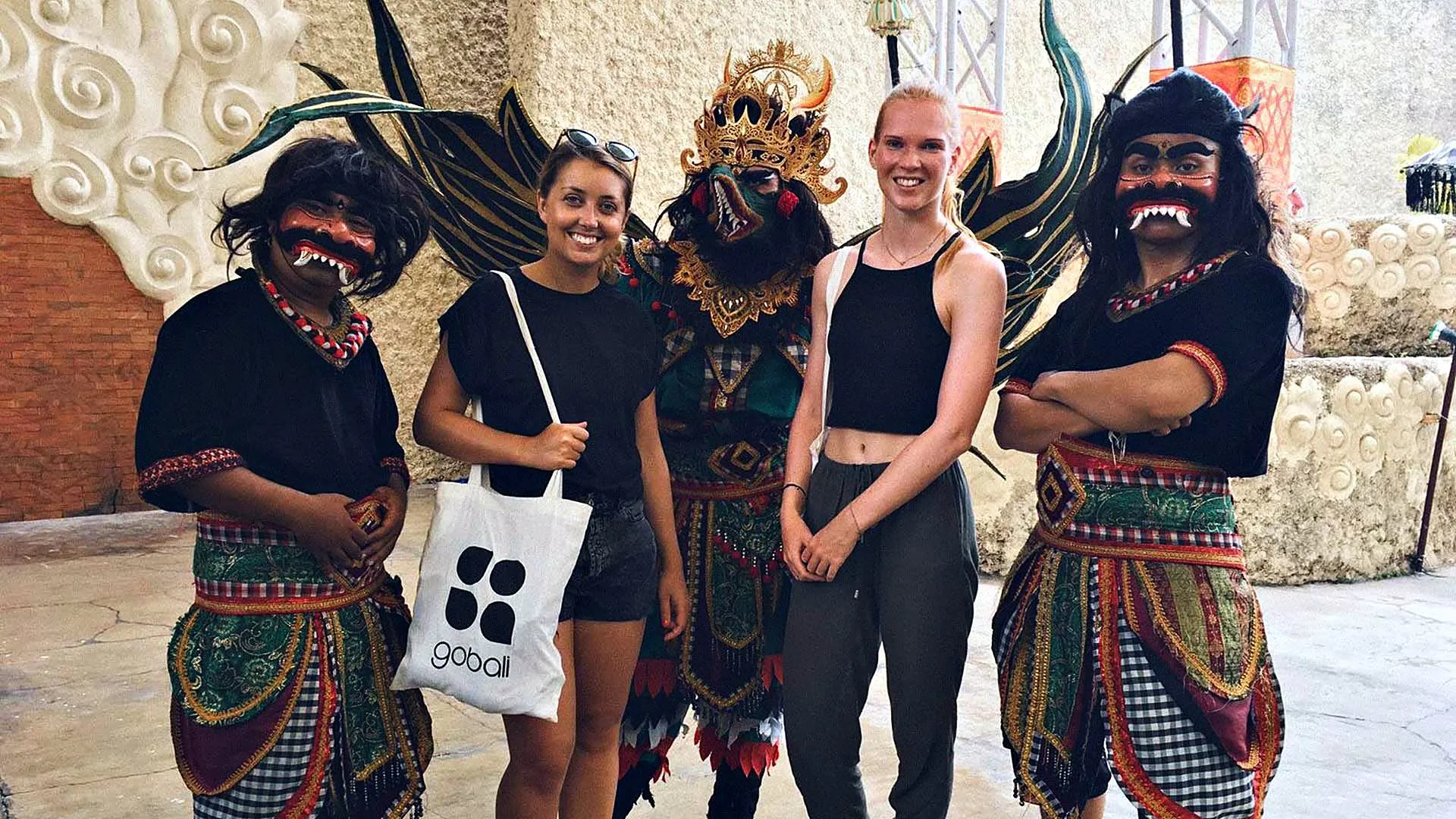
Offerings everywhere
Every morning, small palm-leaf baskets with flowers, rice and incense (canang sari) are placed in front of houses, shops and temples. Walk around them and never step on one.
Nyepi, the day of silence
On the Balinese New Year the whole island stops for 24 hours: no traffic, no lights, even the airport closes. The night before, giant Ogoh-Ogoh monsters parade through the streets. Unforgettable.
Temple etiquette
Cover your shoulders and legs and wear a sarong and sash. Many temples lend them at the entrance. Don’t sit higher than the priests, and ask before taking photos of ceremonies.
Four names
Most Balinese are named after their birth order: Wayan (or Putu) for the first child, Made for the second, Nyoman for the third and Ketut for the fourth. You will meet many of each.
Food to try
From street stalls to beach dinners, eating out is part of daily life.
Nasi campur
Rice with a little bit of everything: vegetables, meat or tofu, egg and sambal. The classic lunch at a local warung.
Sate lilit and babi guling
Balinese minced satay grilled on lemongrass sticks, and the famous roast suckling pig, a festive speciality.
Fresh and healthy
Tropical fruit, smoothie bowls and fresh coconuts on every corner, plus plenty of vegetarian and vegan cafés.
Everyday tips
- Get a local SIM card at the airport or in town. Data is cheap, and you need it for maps and ride apps.
- Carry some cash. Warungs, markets and many drivers only take Rupiah; ATMs are everywhere.
- Bargain with a smile at markets, but not in shops with fixed prices.
- Drink bottled or filtered water. Many cafés offer free refills, so bring your own bottle.
- Respect the sun and the sea: high-factor sunscreen, and swim between the flags on surf beaches.
- Learn a few words: “terima kasih” (thank you) and “selamat pagi” (good morning) open many doors.
Bali is fun
Countless ways to spend your free time.
In the water
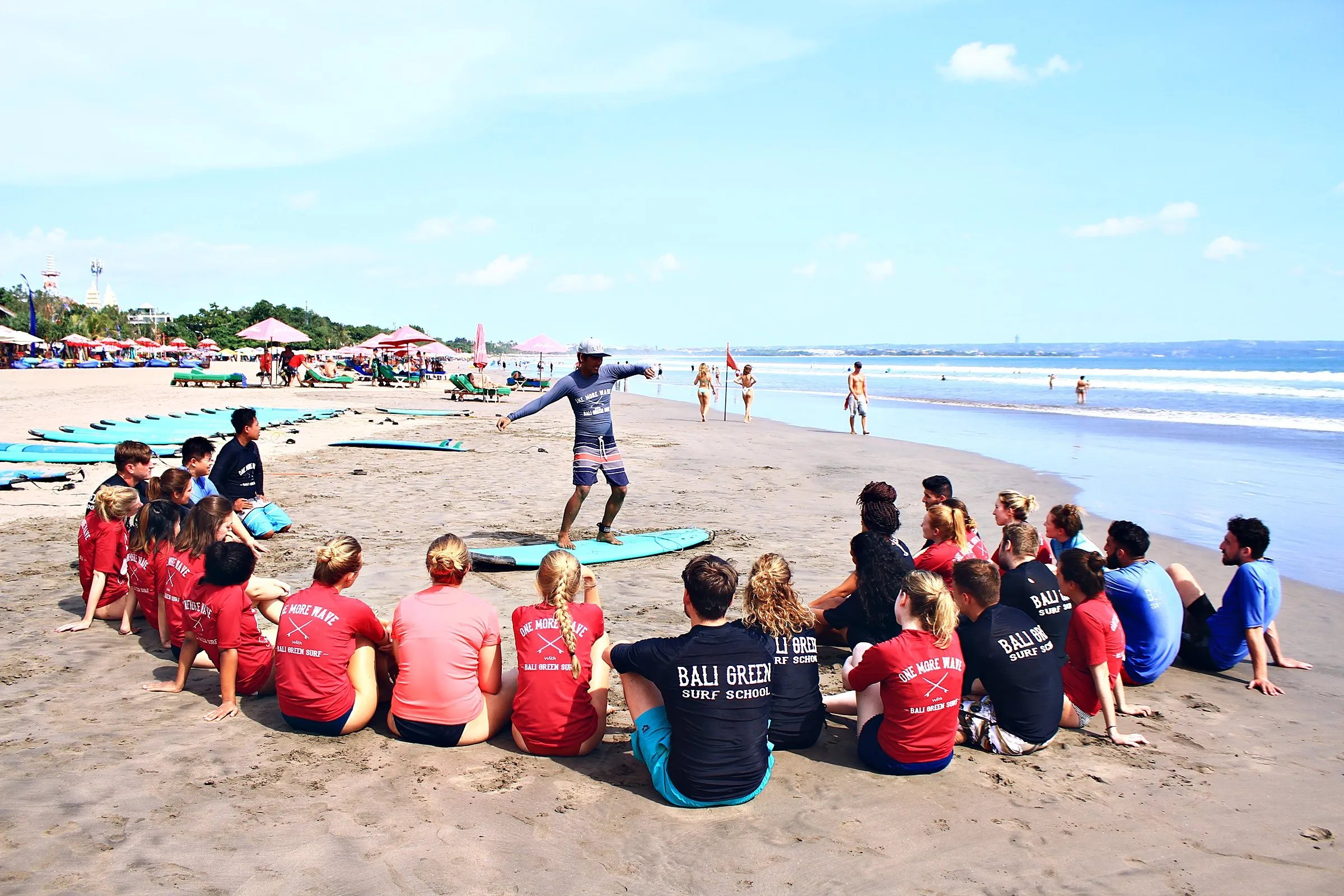
Bali is a surfer’s paradise with waves all year round. Most GoBali students take group surf lessons at the start of the semester to get in tune with the ocean.
By the water
Every one of Bali’s many beaches has its own character. After class there is time to find the hidden ones and enjoy a fresh coconut in the sand.
Under water
Countless dive spots around the island reveal the depth of the ocean. The captivating marine life makes diving a must for water lovers.
Weekend trips
Bali is also the perfect base to explore Indonesia.
Nusa Penida and Lembongan
A short boat ride from Sanur: dramatic cliffs, turquoise bays and snorkelling with manta rays.
Gili Islands and Lombok
Car-free islands with white beaches and sea turtles, and Lombok with its waterfalls and Mount Rinjani.
Java
A short flight away: the sunrise over Mount Bromo, the temples of Borobudur and Prambanan, and the student city of Yogyakarta.
Bali is safe
A peaceful, friendly vibe with little to worry about.
Safer than most
Compared with many other famous study destinations, Bali is very safe. For women traveling alone, this is a strong reason to choose Bali.
Home away from home
Open-minded, warm-hearted Balinese make you feel welcome and secure. For most students, Bali soon feels like home.
Professional healthcare
International hospitals with modern facilities provide professional care. For peace of mind, you need travel health insurance. More on Health & Safety.